How to Prevent Shipping Damage and Reduce Returns With Better Packaging
The surest way to prevent shipping damage and reduce product returns is to build the package around the product: a box sized to fit, an insert that holds it still, board strong enough for the trip, and labels clear enough that customers receive and use the right item. Then test it with a few hard drops before you order in bulk.
It sounds simple, and it is. Yet a surprising number of returns begin with a box that was chosen for its price or its looks rather than for the journey ahead of it. This guide walks through each fix, in the order most brands should tackle them.
Why do customers return products?
Some returns are out of your hands, like a shade that looks different in person. But many start in the delivery van: a cracked bottle, a dented corner or a leak that soaks the whole order. Others begin with a mix-up, when the wrong variant arrives or the customer cannot work out how to use it.
The scale is hard to ignore. Retailers expected shoppers to send back 15.8% of everything they bought in 2025, worth $849.9 billion, and 19.3% of online sales (NRF). Packaging cannot fix a customer's taste. It can fix damage and confusion, and those are the returns you control.
Each one costs more than the product inside. There is the second shipment, the replacement, the time spent answering the complaint and often a refund on top. Then comes the cost that never shows up in your accounts: the one-star review and the customer who quietly never orders again. That is why a box should be judged on what it saves, not only on its price per unit.
How to prevent shipping damage with the right box size
Most transit damage comes down to one thing: movement. In a box that is too large, the product slides and strikes the walls every time the parcel is dropped, tipped or stacked. In a box that is too small, the walls press against the product and pass every knock straight through to it.
The cure is a box built around the product's exact measurements, with only a few millimeters of breathing room. When we size a box, we allow 1 to 2mm of clearance in each dimension for a rigid product, and more for anything soft or irregular.
Measure the product itself, including caps, pumps and anything that sticks out, and remember that thicker board takes up some of the inside space. Every custom box begins as a flat template called a dieline, and our guide on what a dieline is and how to make one shows how that template is drawn.
A snug box is also cheaper to ship, since carriers charge for size as well as weight. We explain how in our guide to packaging trends for 2026.
What is the best packaging for fragile items?
The best packaging for fragile items is not a single material. It is a system of three layers working together: a custom product box or carton that fits closely, an insert or partition that keeps the item from moving, and a corrugated shipping box strong enough to take the knocks of the journey.
Each layer has its own job. The inner carton presents the product and spreads small impacts. The insert stops the product from rattling or touching its neighbors. The outer box carries the weight of other parcels stacked on top and absorbs the drops. Leave out any one of them and the other two have to work much harder.
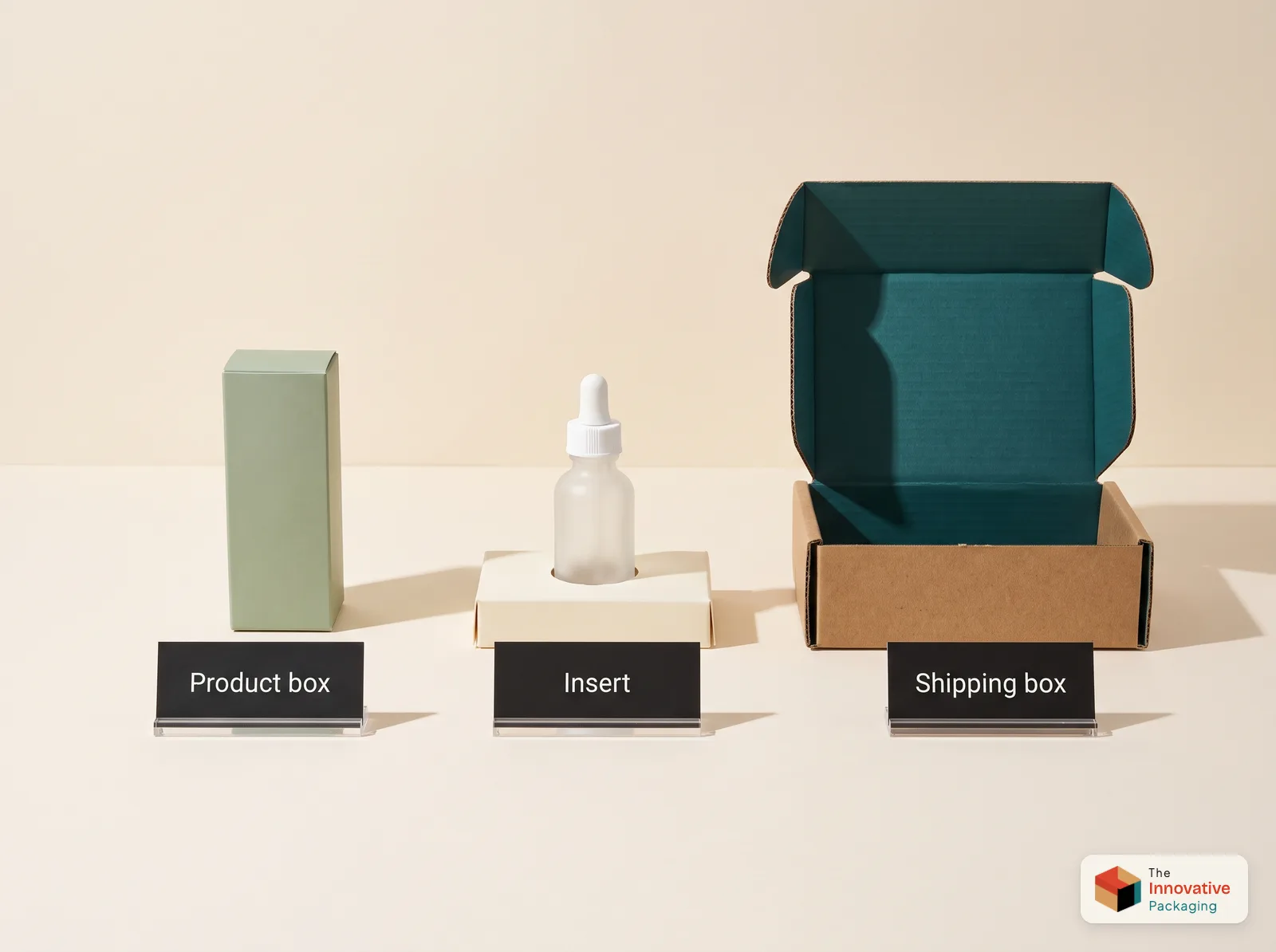
That is where custom packaging for fragile items earns its cost. A stock box and a handful of bubble wrap can work for a few orders a week. Once you ship at scale, a package designed for your exact product protects better, packs faster and looks far more considered when the customer lifts the lid.
Do you need custom box inserts?
A well-sized box keeps the product from sliding around. A custom insert keeps it from moving at all. Plan for packaging inserts if your product is any of the following:
- Glass, such as candle jars, serum bottles, essential oils or perfume
- Fitted with a pump, dropper or delicate cap
- Part of a set or kit, where several items share one box and can knock into each other
- Heavy for its packaging, where the product's own weight does the damage
- Finished with a coating that scratches easily, like gloss or metallic
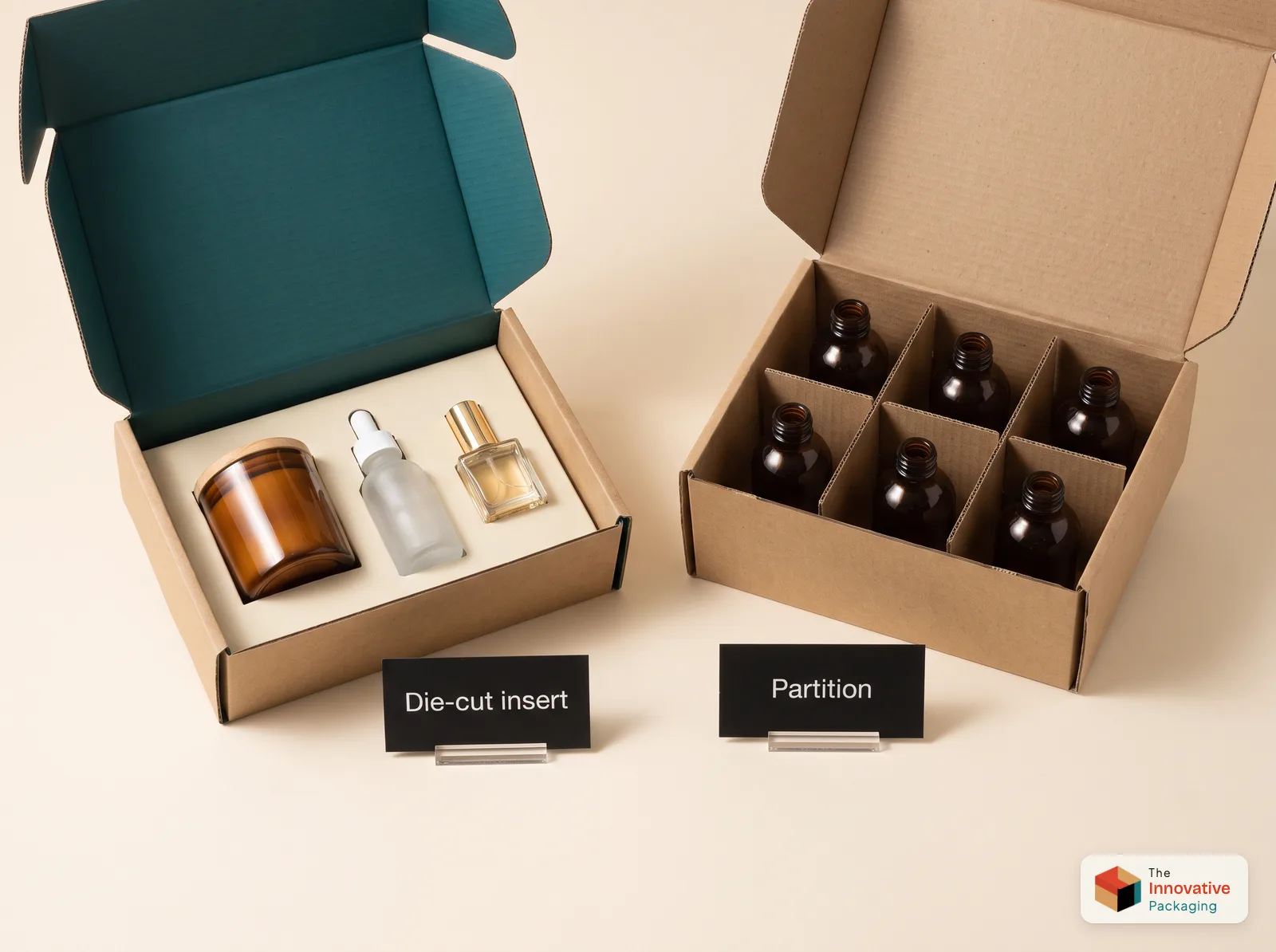
For bottles, a partition divides the box into separate cells so nothing touches. We make both punch partitions and fence partitions, along with a glass carrier for bottles that travel together. For single products, a die-cut insert with a cutout shaped to the item holds it firmly in place, whether it sits in a candle box, a serum box or one of our custom mailer boxes.
Corrugated vs cardboard: which board is strong enough for shipping?
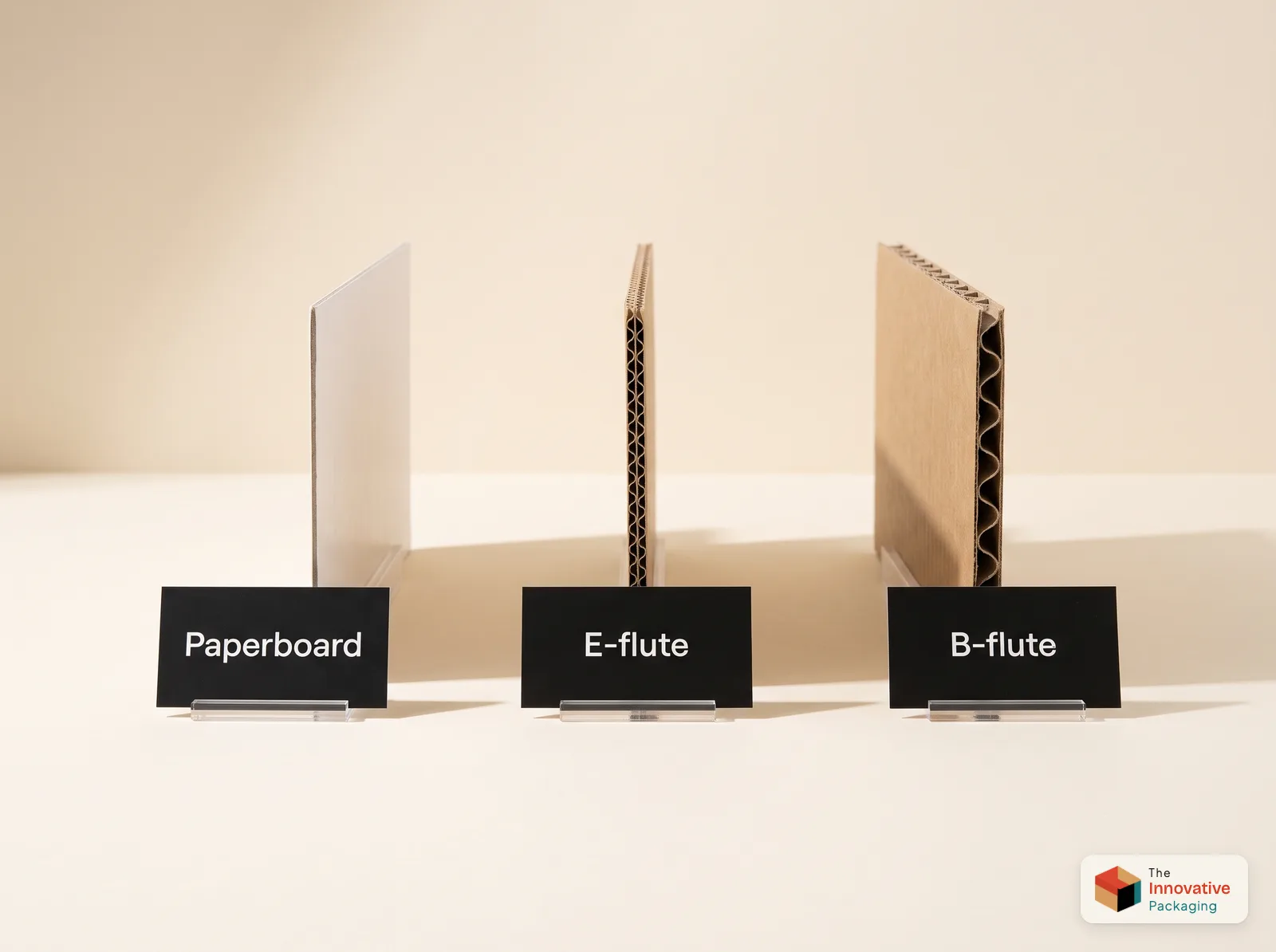
People often say "cardboard" for any brown box, but packaging makers draw a clear line. Paperboard, the material of folding cartons, is a single solid sheet, usually 12pt to 24pt thick. It is made for shelves and display, and it protects well inside a shipper, but it is not built to travel through a carrier network on its own.
Corrugated board is different. It has a wavy inner layer, called the flute, sandwiched between two flat liners. That flute acts like a row of tiny springs, absorbing the shocks that would crack a solid sheet. The two flutes you will hear about most are:
- E-flute, about 1.5mm thick, which is thin and smooth enough to print well. It suits mailer boxes and lighter products.
- B-flute, about 3mm thick, which is stiffer and stronger. It suits heavier products and plain cardboard shipping boxes.
Strength is usually stated as an edge crush test rating, or ECT. A 32 ECT box, a common grade for single-wall shipping boxes, resists about 32 pounds of force per linear inch along its edge. Heavier products may call for a higher rating or a double-wall box, which has two flute layers instead of one.
Keep in mind that moisture weakens corrugated board. Higher humidity lowers its strength, edge crush included (Fibres & Textiles in Eastern Europe), so a box that holds up in a dry warehouse can soften on a humid loading dock. When in doubt, ask your supplier for the rating and the board grade in writing.
Rigid boxes are stronger still, but they cost more and ship fully assembled. Our comparison of rigid boxes vs folding cartons explains when the extra cost pays off, and our materials and printing guide compares every board we offer.
Is void fill enough to protect a package?
Sometimes, for products that are light and sturdy. UPS asks for at least two inches of packing peanuts or tightly crumpled kraft paper between lightweight items and the outer box (UPS). The trouble is that loose fill settles and shifts, so over a long trip a product can slowly work its way to the side of the box, right where the next impact lands.
For anything fragile, a fitted insert is the better form of protective packaging. It holds the product in one position, uses less material and gives the customer a tidy, deliberate unboxing instead of a drift of peanuts on the kitchen floor. Think of void fill as the backup plan and a well-designed box as the real fix.
Whatever you use, finish the job properly. Seal every seam with real packing tape, keep the weight centered and put the heaviest item at the bottom.
How to ship glass bottles, candles and perfume without breaking
Some products need extra thought, and they happen to be among the most common things small brands sell.
How to ship glass bottles without breaking
Give each bottle its own cell with a partition or a fitted insert, so glass never touches glass. Protect the neck and cap, which are the weakest points, and choose a corrugated outer box rather than a paperboard carton on its own.
How to ship candles safely
A candle jar faces two threats: impact and heat. A snug insert takes care of the first. For the second, remember that a parcel can sit in a hot truck or warehouse for hours in summer, and soft wax can shift or sink. Ship early in the week so orders do not sit in a depot over the weekend, and keep the jar upright and tightly held.
How to ship perfume and skincare products
Bottles with pumps and droppers need a cutout that holds the cap as well as the body. Check your carrier's rules before you ship perfume. USPS, for example, accepts perfume that contains alcohol by ground transportation within the United States only, never by air or abroad (USPS). For skincare products in jars and tubes, a tight-fitting cosmetic box plus an insert stops lids from loosening on the way.
Can labels and instructions reduce return rates?
Yes, because plenty of returns have nothing to do with damage. The customer received the wrong variant, could not tell two products apart, or used the product incorrectly and decided it did not work. If you want to reduce returns in ecommerce, these are some of the easiest wins:
- Print the variant, size or shade large on the outside of the box, so the packer and the customer can both check it at a glance.
- Give each variant its own color or band, so a mix-up is obvious before the order ships.
- Print short instructions on the inside of the lid or on an insert card, where the customer is sure to see them.
- Add a QR code that opens a how-to video, so customers get it right the first time instead of deciding the product is faulty.
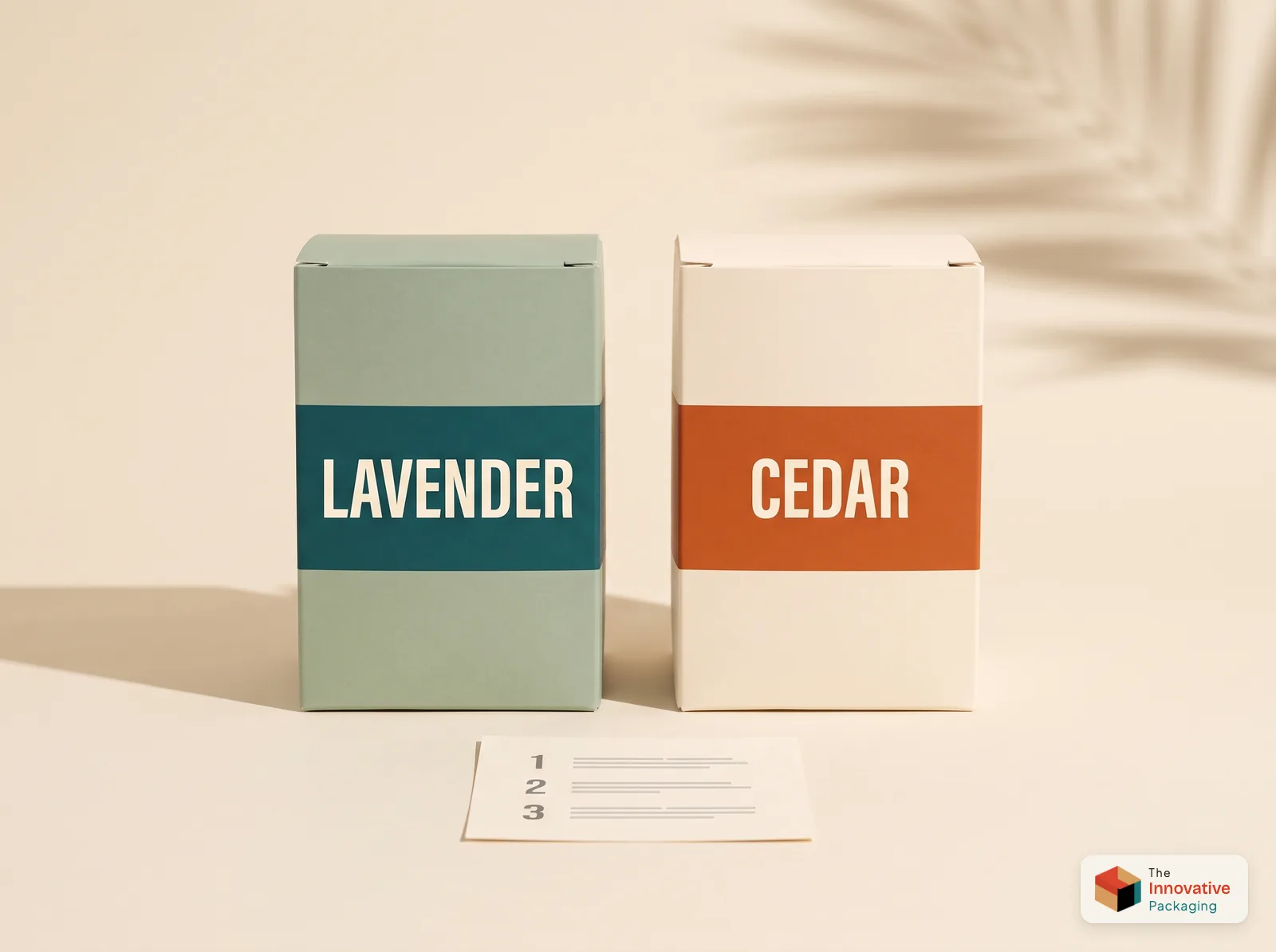
The same thinking runs through our guide to packaging trends: give every QR code one clear job, and label it so customers know what they will get.
How to drop test your packaging before a big order
You do not need a lab to find a package's weak spots. Testing labs follow standards such as ISTA 3A, a general simulation of a single parcel moving through a delivery network. You can borrow the same idea at home:
- Pack the box exactly as you plan to ship it, product and all.
- Drop it from about knee height onto a hard floor: flat on its base, on each corner of the base and on its longest edge.
- Open it and inspect the product, the insert and the corners of the box.
- Ship a few to yourself, or to friends in other states, and see how they arrive.
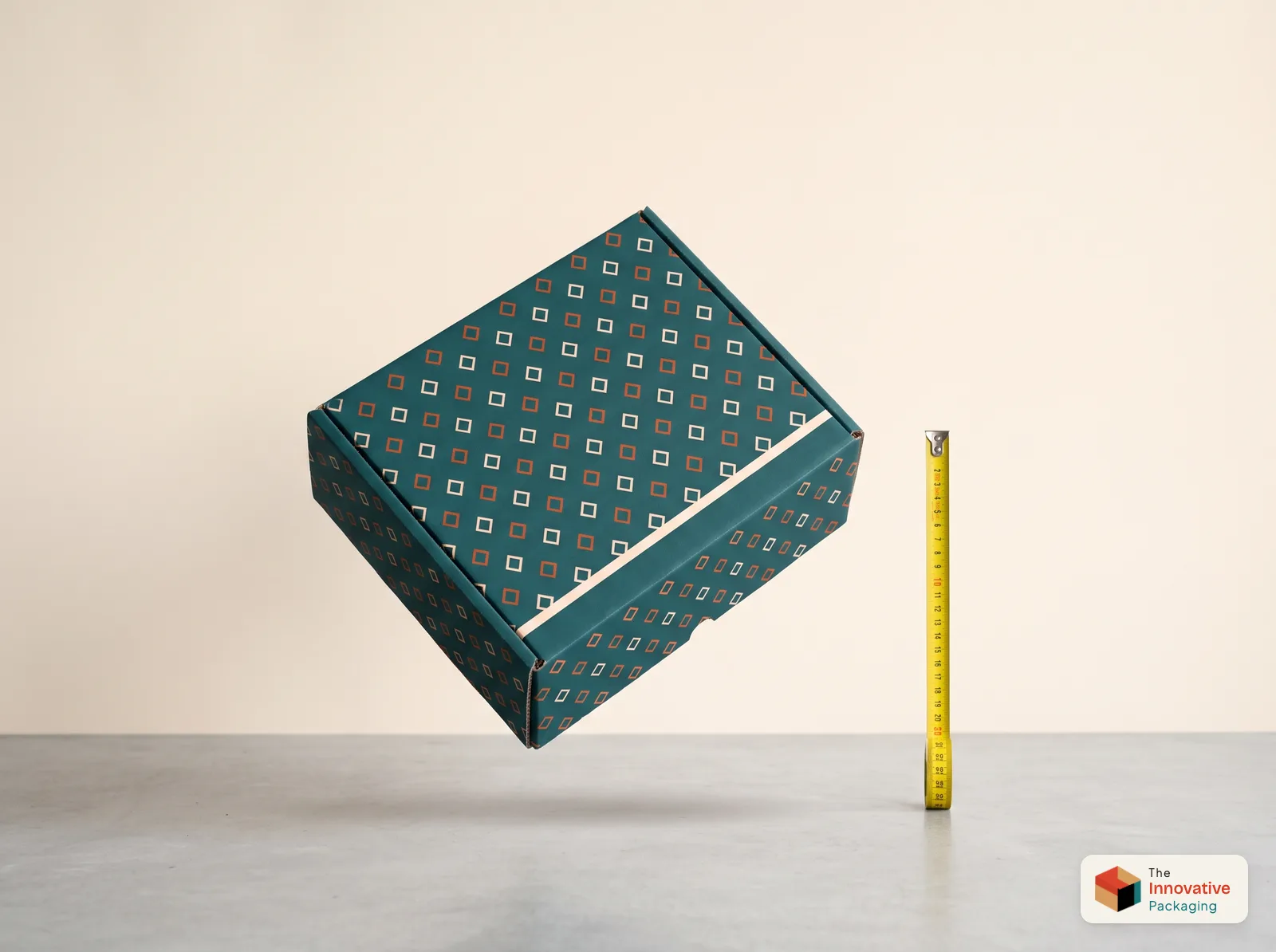
If something breaks, change one thing at a time: first the fit, then the insert, then the board. Our orders start at 100 units, so you can test a new build on a small run before committing to thousands. The custom box cost guide shows how the price per box changes as you scale up.
Where should you start?
Pull your last twenty returns or complaints and sort them by cause. If most are breakage, start with fit and inserts. If most are crushed boxes, look at the board. If most are wrong items or "it does not work," fix the labels and instructions. One change aimed squarely at your most common problem will do more good than a full redesign aimed at nothing in particular.
Want a box built to survive the trip? Tell us about your product, its size and your quantity, and how the order ships. We will recommend the fit, insert and board that suit it. Orders start at 100 units, every order includes a free dieline and a digital proof before printing, and shipping is free anywhere in the USA. Request a free quote for custom shipping boxes.
Founder & CEO, The Innovative Packaging · 10 years experience
Ijlal Ahmed founded The Innovative Packaging and runs its production facility in Pakistan. He is the third generation of his family in printing and packaging, a business they have been in for more than 50 years, and works directly with brands on quotes and dielines. He holds a BSc in Economics from the Lahore School of Economics.
Ijlal Ahmed on LinkedInFrequently Asked Questions
Shop the packaging in this guide
Box by Style
We make custom packaging boxes in over 40 structural styles at The Innovative Packaging. Tuck end boxes, tray boxes, display boxes, specialty boxes, gift packaging. If there's a box style your product needs, we most likely make it. Every box ships fully custom printed to your exact dimensions and branding. Minimum order is 100 units per style, and design support is included at no extra cost.
Browse Box by Style →Custom Cosmetic Boxes
Looking for premium custom cosmetic boxes wholesale that make your beauty brand stand out? At The Innovative Packaging, we produce fully custom cosmetic packaging tailored to your exact product dimensions, branding, and retail requirements. Whether you need boxes for perfume, serum, lip gloss, hair products, essential oils, or face care kits, we have a packaging solution for every product in your beauty lineup.
Browse Custom Cosmetic Boxes →Eco-Friendly Packaging Boxes
Looking for sustainable custom eco-friendly packaging boxes wholesale that reflect your brand's commitment to the environment? At The Innovative Packaging, we produce fully custom green packaging using kraft paper, recycled cardboard, and biodegradable materials tailored to your exact product dimensions and branding. Whether you need eco-friendly boxes for food, dates, baked goods, or general retail products, we have a sustainable packaging solution for every product in your lineup.
Browse Eco-Friendly Packaging Boxes →More from the blog
Packaging Trends 2026: What Small Brands Should Act On
Seven states now have packaging recycling laws, recyclable labels face stricter rules and oversized boxes cost more to ship. Here are the packaging trends for 2026 that actually affect small brands, and what to do about each one.
Read more →Rigid Boxes vs Folding Cartons: Which One Is Worth the Cost?
Rigid boxes feel heavier and look more premium, but they cost more and ship assembled. Folding cartons ship flat and cost less. Here is how to choose, and how to make a folding carton feel premium on a smaller budget.
Read more →How Much Do Custom Boxes Cost in 2026? A Guide for Small Brands
Custom box prices depend on five things: style, size, material, print and finish, and quantity. Here is how each one moves the price, and how to get an exact quote.
Read more →