Perfume Boxes
Fragrance is the category where the box carries the most of the purchase decision. The liquid is invisible, the scent cannot be sampled through packaging, and the bottle sits behind glass in most retail settings - so weight, edge quality and the way a lid lifts are doing the persuading. That is why perfume packaging is usually rigid board rather than a folding carton.
FSC Certified
Sustainably sourced paper and board
Food-Grade Safe
FDA-compliant materials for direct food contact
Recyclable options available
Uncoated kraft and paper builds qualify; laminated, foil and rigid builds do not
Sedex Member
Audited for ethical, responsible sourcing
Specifications
- Material
- Cardboard / Kraft
- Printing
- Full-Color CMYK / Offset
- Finish
- Matte / Gloss Lamination
- MOQ
- 100 Units
Printing & Finishing
- Full-Color CMYK
- Spot Colors (Pantone)
- Interior Printing
Why Rigid Rather Than a Folding Carton
Rigid board of 1.5-3mm does not flex when the box is lifted. That single property accounts for most of the perceived quality in a fragrance box: a carton that gives slightly under finger pressure reads as cheap no matter how well it is printed, and one that does not, reads as expensive before it is even opened.
Rigid also does the structural work fragrance needs. A 100ml glass bottle with a heavy metal collar and a weighted cap is a substantial object, and a folding carton base will bow under it over time on a shelf. Rigid holds a magnetic or lift-off lid at a consistent gap, which is what makes the lid come away smoothly rather than catching.
The trade-offs are real: rigid costs more per unit, arrives assembled rather than flat so it takes more storage and freight volume, and it cannot be flat-packed for retailers. Our materials and printing reference sets out how it compares against heavy folding carton stock, which remains a sensible choice for discovery sets and travel sizes.
Holding the Bottle
For anything glass and heavy, an insert is not optional. A cut insert - paperboard, foam, or a moulded tray - does three jobs: it centres the bottle so it cannot strike the walls, it takes the impact of a knock instead of the glass, and it controls the reveal, presenting the bottle upright when the lid comes off rather than letting it lie loose.
Bottle shape drives the insert more than weight does. A cylindrical bottle can sit in a simple punched hole. A faceted or sculpted bottle needs a profile cut to it, otherwise it settles at an angle and looks wrong the moment the box is opened. Send the actual bottle where possible; a technical drawing rarely captures the taper.
Closures and How the Box Opens
- Lift-off lid: the classic two-piece. Simple, reliable, and the gap between lid and base is the detail that signals quality - too loose and it rattles, too tight and it drags.
- Magnetic closure: a book-style box that snaps shut. The most premium-feeling option and the most photographed, at a higher unit cost.
- Drawer and sleeve: a tray that slides from a printed outer. Slower to open, which suits a slow, deliberate reveal, and it holds an insert particularly well.
- Shoulder box: a lid that closes onto a visible inner neck, used widely in fine fragrance because the shoulder itself reads as a finished detail.
Finishes That Define the Category
Fragrance uses a narrow, well-established finishing vocabulary, and it works. Gold or silver foil on the logo over soft-touch lamination is the standard luxury combination - the matte body makes the metal read as precious rather than shiny. Embossing adds a tactile layer that photographs well under directional light, which matters when most discovery now happens on a screen. Spot UV over a matte ground gives contrast without introducing a second material.
One practical note: foil holds a crisp edge on logos and rules but loses fine detail below roughly 1pt line weight, so a delicate serif logotype may need thickening slightly for the foil version. We flag that at proof stage rather than after the die is cut.
Common Fragrance Box Sizes
- 30ml bottle: around 60 x 60 x 95mm.
- 50ml bottle: around 70 x 70 x 115mm - the most common single build.
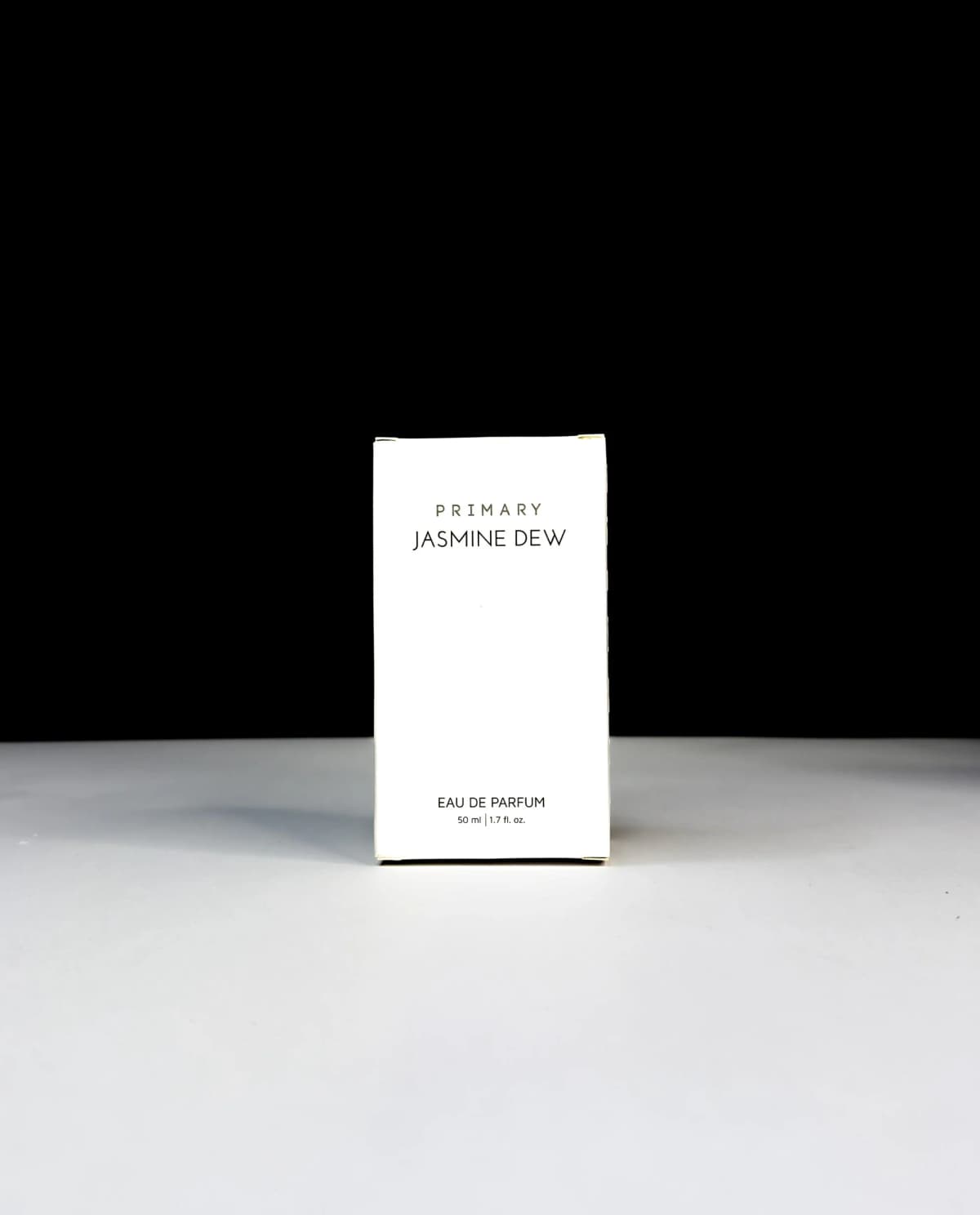
- 100ml bottle: around 85 x 85 x 145mm, with an insert as standard.
- Discovery set, five vials: around 120 x 60 x 30mm with a punched tray.
- Gift set, bottle plus body product: around 200 x 100 x 150mm.
Internal dimensions in every case, and sized to the bottle with its cap fitted.
Testers, Sets and Overwrap
Most fragrance lines need more than one build. Testers are usually a plain or single-colour version of the retail box, produced in far smaller numbers - viable here because there are no die or plate fees, so a 100-unit tester run carries no tooling cost. Discovery sets of vials use a shallow tray with a punched insert and are often the highest-converting product a new fragrance brand sells.
Decide on cellophane overwrap early. It is the category's default tamper evidence and it protects the finish in transit, but it also means the customer's first contact is with film rather than with the soft-touch surface you paid for. Some brands now skip it and use a discreet seal instead.
Order the Box After the Bottle Is Final
The most expensive mistake in fragrance packaging is drawing the dieline against a sample bottle that later changes. Glass moulds shift slightly between suppliers and production runs, cap suppliers substitute components, and a millimetre on the bottle diameter is a visible gap once the insert is cut to it.
Wait until the bottle and cap are both final and in hand before we cut the insert. If timelines force an overlap, we can build the outer box first - it has more tolerance - and cut the insert once the production bottle arrives, since the insert is the part that has to be exact.
Requesting a Quote
Wait until the bottle and cap are final, then send them to us with the weight. Tell us the closure style you have in mind and whether testers and set packaging are coming too, since those are usually cheaper to originate alongside the retail box than after it. Related: serum boxes and the gift box range.
Perfume Boxes — FAQs
Got questions? We have answers. If you need anything else, get in touch.
Rigid board of 1.5-3mm does not flex when lifted, which is most of the perceived quality in a fragrance box. It also holds a magnetic or lift-off lid properly, and supports the weight of a heavy glass bottle without the base bowing.
Gold or silver foil on the logo with soft-touch lamination on the body is the standard luxury combination. Embossing adds a tactile element that photographs well, and spot UV on a matte ground gives contrast without adding a second material.
For anything glass and heavy, yes. A cut insert holds the bottle centred and stops it striking the walls, and it controls the reveal when the lid comes off - the bottle presented upright rather than lying loose.
Related Products
Ready to start your project?
Tell us what you need. We get back to you within a business day.