Packaging Trends 2026: What Small Brands Should Act On
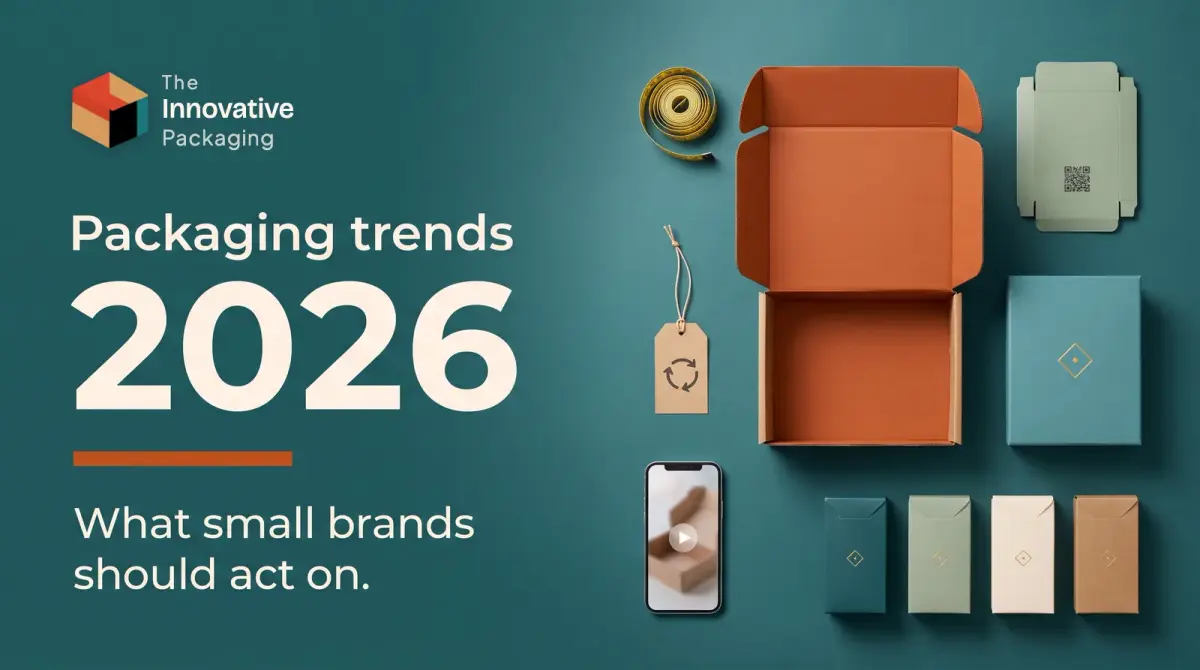
The packaging trends that will shape 2026 are mostly practical. Seven US states now have packaging recycling laws, "recyclable" labels face stricter rules, and carriers keep charging more for oversized boxes. On the design side, premium packaging is getting quieter, brands are planning for the unboxing video, and QR codes are finally earning their place on the box.
Most trend roundups stop at what looks fresh this year. This guide covers what has changed and what it costs you, and it lists the few moves worth making before your next print run. Some of these trends are about style. More of them are about money.
1. Do the new packaging recycling laws apply to small brands?
Usually not yet, but you need to check each state. Seven states now have packaging recycling laws: Maine, Oregon, California, Colorado, Minnesota, Maryland and Washington. All of them exempt small producers, and each sets its own limit. Oregon's cutoff is $5 million in global revenue. California's is $1 million in California sales.
If you sell across the US, this is the trend most likely to land on your desk as an invoice, and the point where sustainable packaging stops being a marketing choice and becomes a line in your budget. These are extended producer responsibility (EPR) laws: the companies that sell packaged goods pay to run the state's recycling system. In most of these laws, the "producer" is the brand owner, the company whose name is on the product. The printer who made the box does not count.
Two states already charge annual fees. Oregon's program started in July 2025, and Colorado producers began paying dues in January 2026. California's annual fees begin in 2027, and the other four states phase in over the next few years.
Read the fine print, because the tests are not the same. Oregon exempts producers with under $5 million in gross global revenue or under 1 metric ton of packaging sold into the state (Oregon DEQ). California sets the bar at under $1 million in California sales, and the exemption is not automatic. You have to apply for it (CalRecycle).
Two things to do now:
- List every state you ship to and check its small producer test. Being exempt in Oregon tells you nothing about California.
- If you are growing toward a limit, budget for fees early. They are based on how much packaging you sell and what it is made of, so a lighter, simpler box keeps the bill down.
2. Can you still put a recyclable label on your box?
Yes, as long as it is true where you sell. Under the FTC Green Guides, you can only call a package recyclable without any qualifier if recycling for it is available to at least 60% of the people or communities where it is sold. Below that, the FTC wants a clear qualifier, such as "This package may not be recyclable in your area."
A recycling symbol used to be an easy add to the artwork. Now it is a claim you may have to defend, and labels are where sustainable packaging trends meet the law.
California pushed further with SB 343, which limits the chasing arrows symbol and the word "recyclable" to materials the state confirms are actually recycled there. The compliance date was October 4, 2026. A federal court paused enforcement in July while a lawsuit plays out (Packaging Dive), but the law is still on the books, and the pause could end.
The safest path is a box that really is easy to recycle, labeled with honest wording. Uncoated kraft and plain paperboard are the strongest choice, since 94% of Americans can recycle paper and paperboard in their community (AF&PA). Plastic lamination, plastic windows and mixed materials make a box harder to recycle. And if you are not sure, a clearly qualified label holds up far better than a bare symbol.
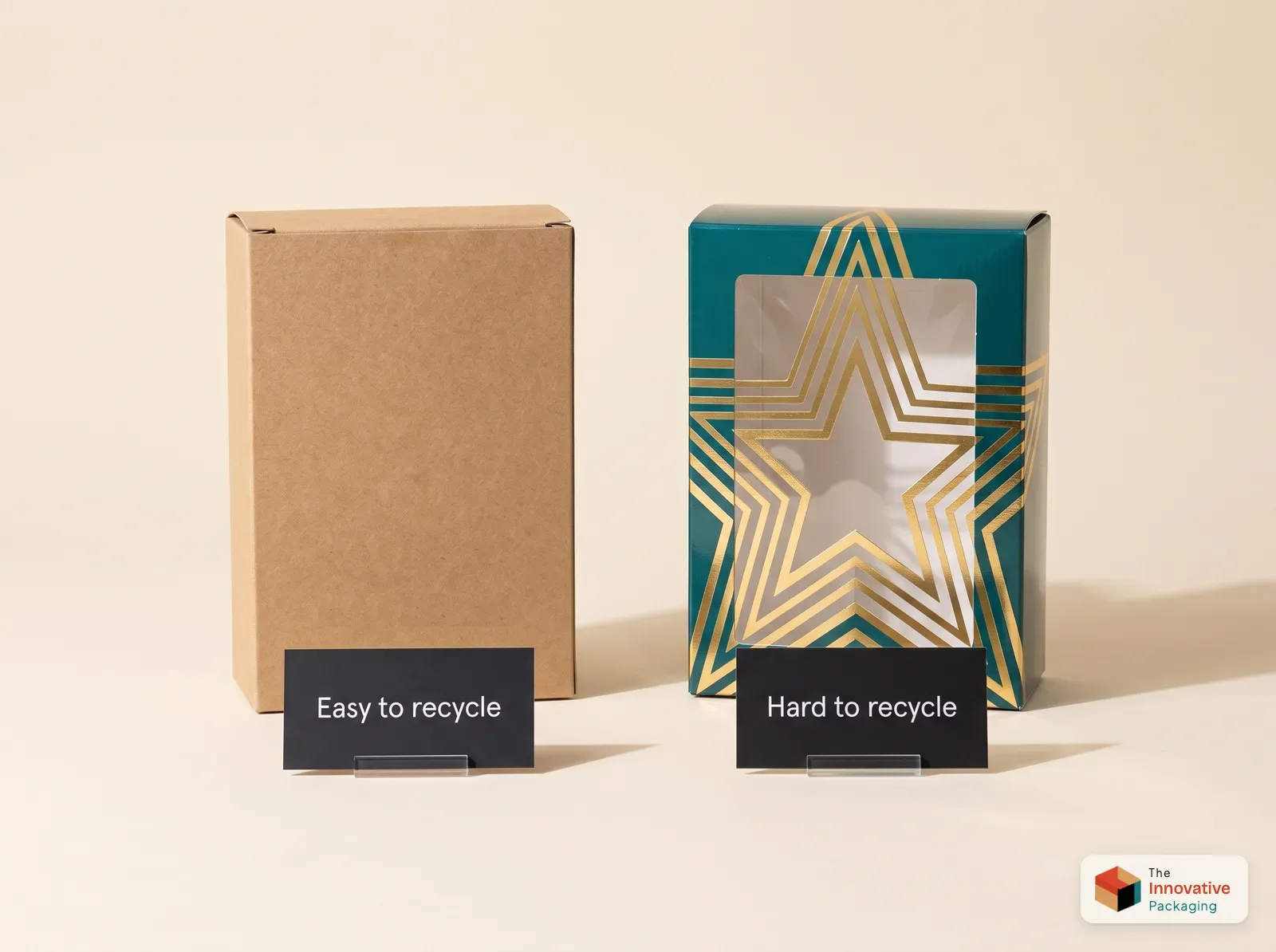
Our eco-friendly boxes are built from recyclable kraft and paperboard, and our materials and printing guide shows which finishes keep a box recyclable.
3. Right-sized boxes cut shipping costs
Carriers charge for space as well as weight. UPS calculates a "dimensional weight" by multiplying a box's length, width and height in inches and dividing by 139 on daily rates. You pay for whichever is higher, the scale weight or the dimensional weight (UPS).
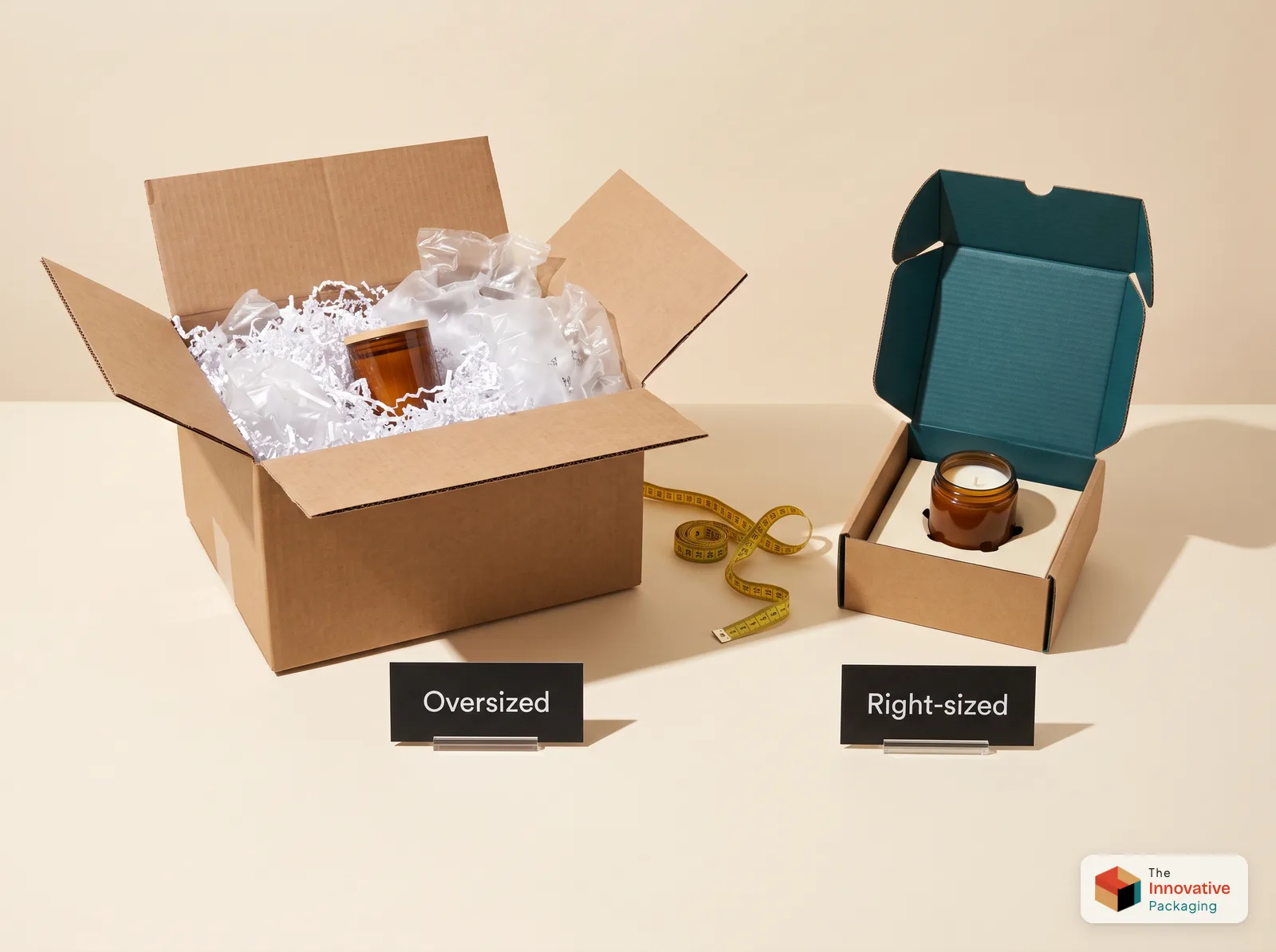
So a light candle in a roomy box can ship like a heavy one. Then there is the extra board, the filler, and a product that rattles around in transit and arrives chipped. Oversized boxes cost you three times over.
The fix starts with a tape measure. Size the box to the product with only a few millimeters of clearance, and swap loose filler for a fitted insert that holds the product still. For ecommerce orders, a custom mailer box cut to your product's size will almost always beat a stock carton with room to spare.
Every right-sized box begins as a dieline, the flat template it is cut from. If that term is new, start with what a dieline is and how to make one.
4. Premium packaging is getting quieter
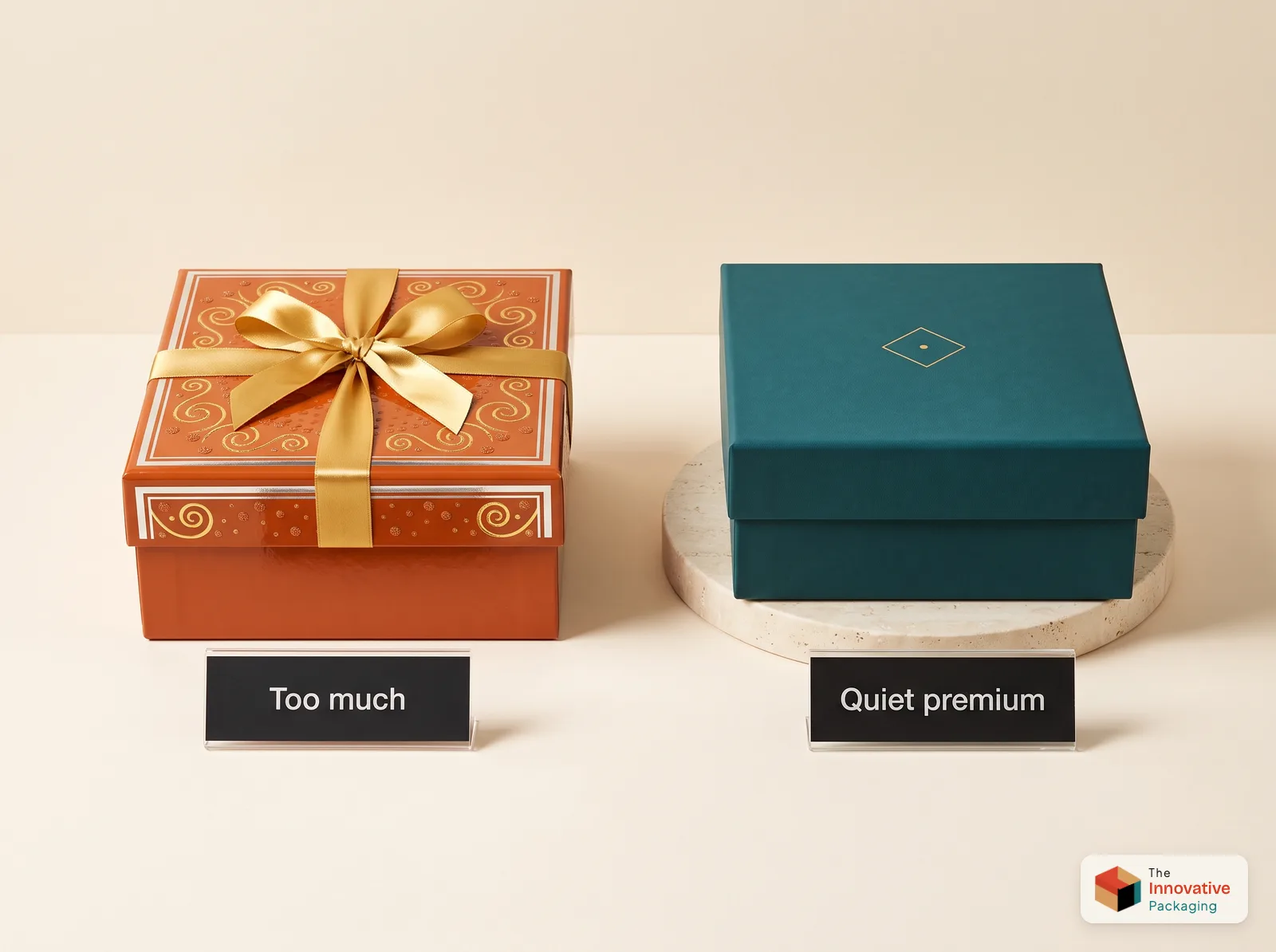
Gold foil, spot gloss, embossing and a giant logo, all on one lid. Shoppers have seen that box a thousand times, and stacking every finish now reads as trying too hard. Of all the packaging design trends this year, this one is the clearest. The premium look in 2026 is calmer: solid board, one finish that earns its place, generous white space and a lid that lifts away cleanly.
Your budget wins here too, because every finish adds to the price per box. One well-chosen detail often looks more expensive than four. Where to put your money:
- One hero finish, like gold foil on the logo or a blind emboss, with everything else kept simple
- Soft-touch lamination, whose velvety surface says "quality" before anyone reads a word
- Board and structure first. A box that feels solid in the hand does more than extra ink
Choosing a surface? Our guide to matte vs gloss lamination breaks it down. Still torn between box types? Read rigid boxes vs folding cartons.
5. Packaging is being designed for the unboxing video
Your customers film their deliveries, and creators review the box as closely as the product. A good opening can put your brand in front of people who have never heard of you.
The outside of the box rarely makes the clip, though. The moments people film are the lid coming off, the first look at the product and whatever small surprise is waiting underneath. That is where the design budget should go.
Print the inside of the box. It costs little and it is exactly what the camera sees. Add an insert so the product sits perfectly in place, and think about the order of the reveal. A tray and sleeve box slides open slowly, which plays beautifully on video.
6. QR codes on packaging are finally earning their place
For years, QR codes on boxes sent people to a homepage and were quickly forgotten. That is changing. Under GS1 US's Sunrise 2027 plan, retail checkouts across the US aim to scan 2D barcodes such as QR codes by the end of 2027, while standard UPC barcodes keep working after that (GS1 US).
For a small brand, the real value is what happens after the sale. One code can open a how-to video, an ingredient list, a reorder page or a loyalty sign-up, and it works for as long as the box sits on a shelf at home.
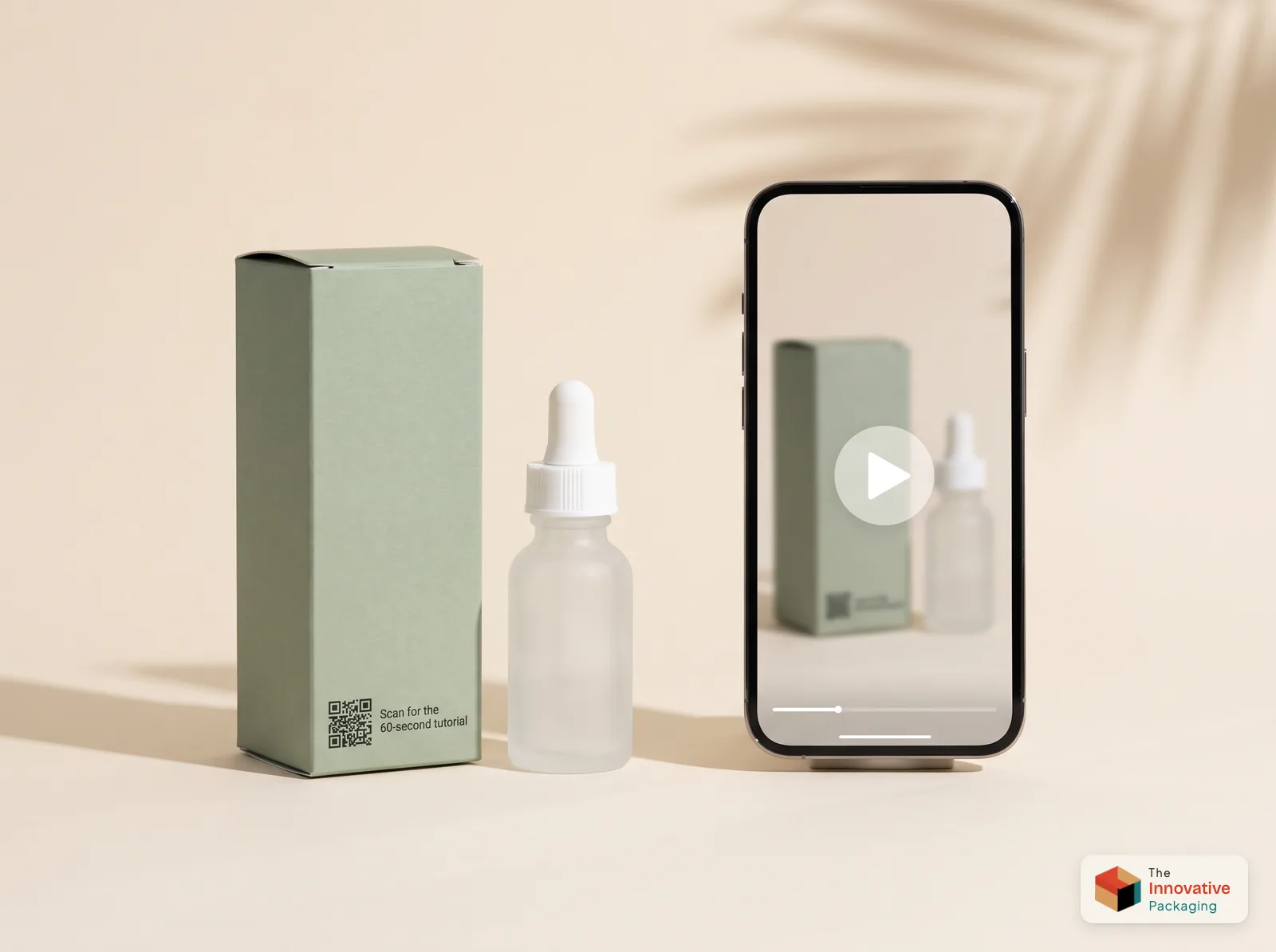
Give each code one job and say what it is in a few words next to it, like "Scan for the 60-second tutorial." Point it at a page you control, so you can change the destination later without reprinting. If you sell through retailers, keep the UPC on the box and ask the buyer before relying on a 2D code alone.
7. Short runs make personalized packaging affordable
Seasonal designs and limited editions used to be a big-brand game, because they meant ordering thousands of boxes per version. Lower minimums and digital printing have changed the math. A small brand can now run a holiday box or a collab edition without filling a warehouse.
Short runs are also the cheapest way to test an idea. Print a new design in a small batch, watch how customers respond, then scale what works.
Two easy places to start: a limited-edition box for your best seller while the core box stays the same, or a printed insert card for personal touches like a thank-you note on first orders. Our orders start at 100 units, with lower pricing from 500 units. The custom box cost guide shows how quantity changes your price per box.
8. Brands are moving to packaging systems
Growth has a way of making packaging messy. One product becomes ten, each new box gets designed on its own, and two years later the colors have drifted, the logo has wandered and the shelf no longer looks like one brand.
A packaging system stops the drift. You decide the rules once, covering colors, logo placement, type, box style and finish, and every new product follows them. Launches get faster, reorders get simpler and the whole range is recognizable from across the room.
- Choose one box style per product type and keep it across every size.
- Use a single layout and change only the color or name for each variant.
- Store dielines and final artwork together, so every reorder matches the last run.
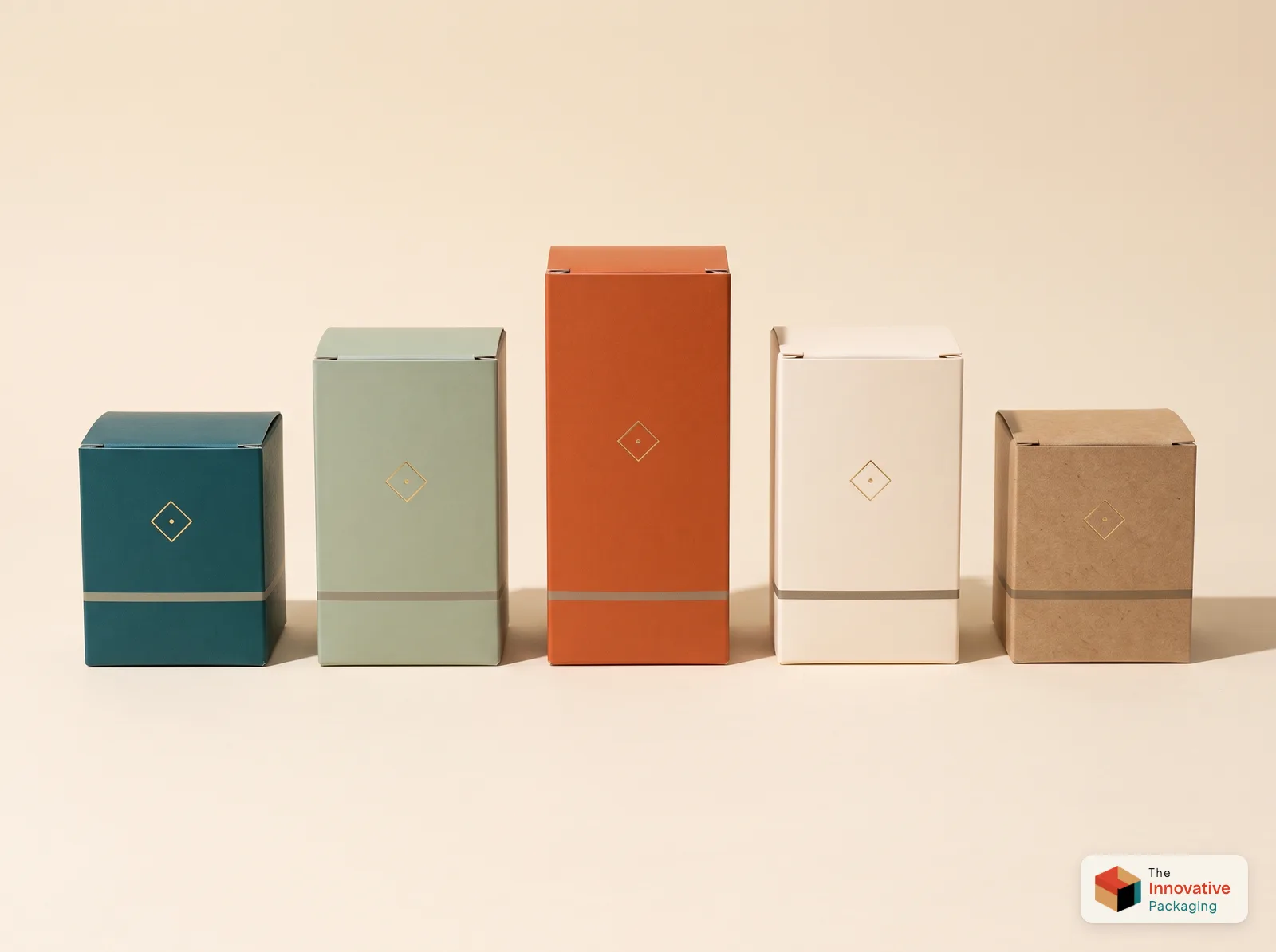
Browse boxes by style to pick your core structures, or see what fits your field in boxes by industry, from cosmetic boxes to food boxes.
Which packaging trend should you act on first?
Start with the packaging trends that pay for themselves. A right-sized box, fewer finishes and a recyclable material will lower your shipping bill, your price per box and any future EPR fees in one move. Once that is in place, put the savings toward a better unboxing and a QR code that does something useful.
Whatever you change, compare total cost, because the price per box is only part of it. A cheaper box that arrives crushed, ships at a higher dimensional weight or needs a new label next year ends up costing more. These 10 questions to ask a custom packaging supplier will help you compare quotes on equal terms.
Ready to bring your packaging up to date for 2026? Tell us about your product, its size and your quantity, and we will recommend a build that fits your budget. Orders start at 100 units, every order includes a free dieline and a digital proof before printing, and shipping is free anywhere in the USA. Request a free quote for your custom boxes.
Founder & CEO, The Innovative Packaging · 10 years experience
Ijlal Ahmed founded The Innovative Packaging and runs its production facility in Pakistan. He is the third generation of his family in printing and packaging, a business they have been in for more than 50 years, and works directly with brands on quotes and dielines. He holds a BSc in Economics from the Lahore School of Economics.
Ijlal Ahmed on LinkedInFrequently Asked Questions
Shop the packaging in this guide
Eco-Friendly Packaging Boxes
Looking for sustainable custom eco-friendly packaging boxes wholesale that reflect your brand's commitment to the environment? At The Innovative Packaging, we produce fully custom green packaging using kraft paper, recycled cardboard, and biodegradable materials tailored to your exact product dimensions and branding. Whether you need eco-friendly boxes for food, dates, baked goods, or general retail products, we have a sustainable packaging solution for every product in your lineup.
Browse Eco-Friendly Packaging Boxes →Box by Style
We make custom packaging boxes in over 40 structural styles at The Innovative Packaging. Tuck end boxes, tray boxes, display boxes, specialty boxes, gift packaging. If there's a box style your product needs, we most likely make it. Every box ships fully custom printed to your exact dimensions and branding. Minimum order is 100 units per style, and design support is included at no extra cost.
Browse Box by Style →Box by Industry
Browse our full range of custom packaging boxes by industry at The Innovative Packaging. We produce premium custom printed boxes for cosmetic, food, retail, gift, and personal care brands across the USA. Every box is fully custom made to your exact dimensions, branding, and product requirements with a minimum order of 100 units and free design support included.
Browse Box by Industry →More from the blog
Rigid Boxes vs Folding Cartons: Which One Is Worth the Cost?
Rigid boxes feel heavier and look more premium, but they cost more and ship assembled. Folding cartons ship flat and cost less. Here is how to choose, and how to make a folding carton feel premium on a smaller budget.
Read more →How Much Do Custom Boxes Cost in 2026? A Guide for Small Brands
Custom box prices depend on five things: style, size, material, print and finish, and quantity. Here is how each one moves the price, and how to get an exact quote.
Read more →10 Questions to Ask a Custom Packaging Supplier Before You Order
Before you pay a custom packaging supplier, ask ten things: what they make, the minimum order, design help, finishes, materials, lead time, proofs, sustainability, quality checks and support. Here is what a good answer sounds like.
Read more →