Does Packaging Affect Sales? How Design Changes What Customers Buy
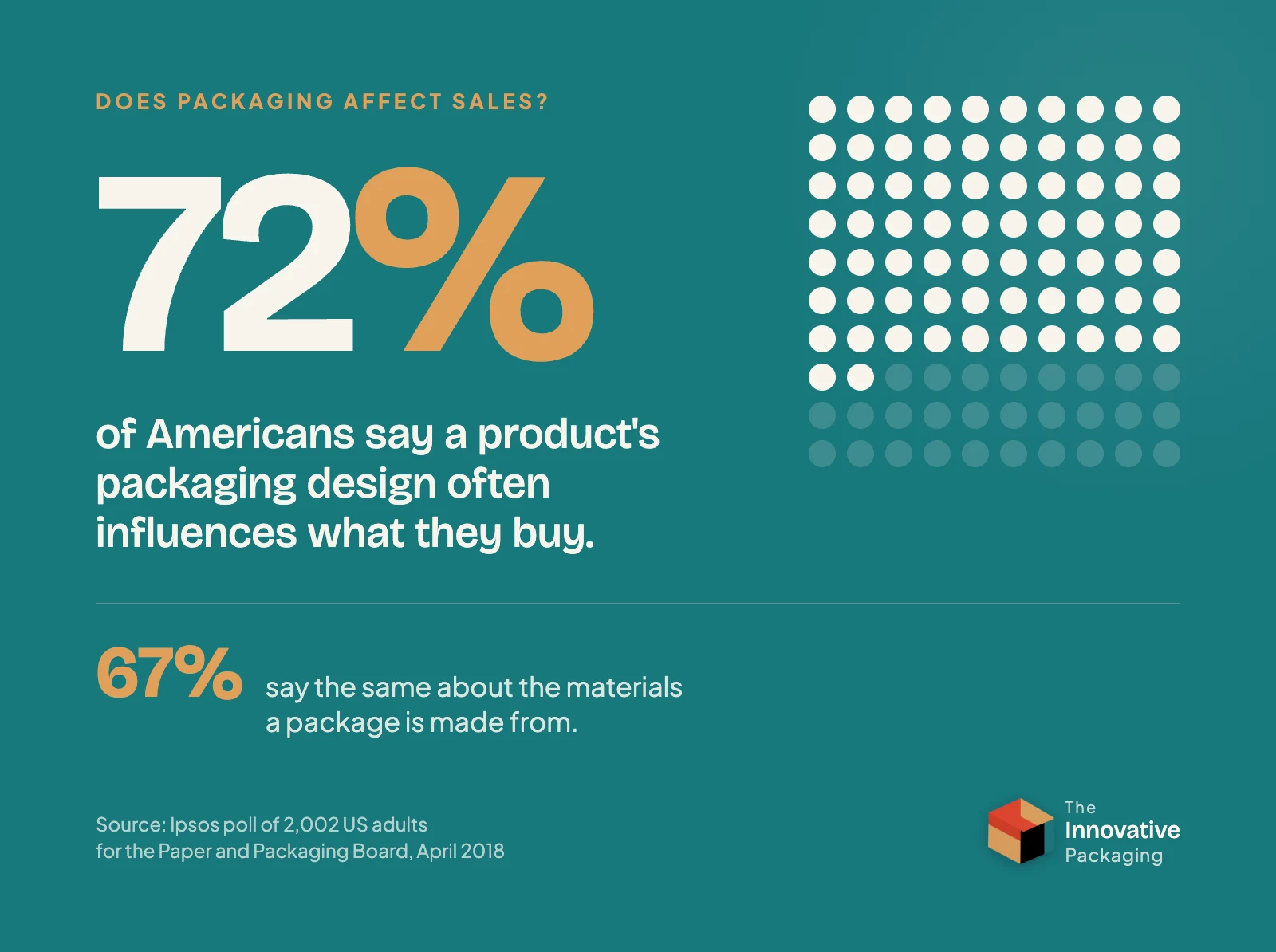
Yes, packaging affects sales, and usually more than brands expect. In a 2018 Ipsos poll of more than 2,000 American adults, 72 percent said a product's packaging design often influences what they buy, and 67 percent said the same about the materials it is made from (Ipsos). We are told not to judge a book by its cover, but when it comes to products, almost everyone does.
Packaging moves sales in six main ways:
- It gets your product noticed, on a shelf or on a screen.
- Its colors and design tell shoppers what to expect.
- Its materials and finish set the price customers feel is fair.
- Clear, honest labeling earns their trust.
- A good unboxing turns a first order into a repeat order.
- Greener materials win over a growing share of buyers.
Here is how each one works, what the research shows and where a small brand should start.
How does packaging influence consumer behavior?
Quickly, and mostly without words. Before a shopper reads a single line of copy, they have already noticed the box or passed it by, guessed what is inside and decided roughly what it should cost.
First impressions form fast. A widely cited 2006 review of color research in the journal Management Decision found that people make up their minds about a product within 90 seconds, and that 62 to 90 percent of that first judgment is based on color alone (Management Decision). If a box looks wrong in that window, it rarely gets a second chance.
1. Packaging gets you noticed
A product nobody sees is a product nobody buys. On a crowded shelf or a busy product page, getting noticed is the first job your packaging has to do.
In a 2009 eye-tracking study published in the Journal of Marketing, researchers from INSEAD and Wharton followed where shoppers looked in front of store shelves. When a brand doubled its facings, the number of times its product appears side by side on the shelf, shoppers became about 10 percent more likely to choose it. For brands with a small market share, the lift was about 67 percent (INSEAD Knowledge). Being seen pays, and the smaller the brand, the more it pays.
You cannot always buy more shelf space, but you can make the space you have work harder. Shelf appeal usually comes down to a few things:
- One bold, distinctive color that you use across your whole range.
- A logo and product name that can be read from a few steps away.
- A clean front panel with one clear focal point, not five competing ones.
- A shape that stands apart, such as a display box on the counter or a window that shows the product inside.
2. Color psychology sets expectations
Color is the first thing shoppers read. They use it as a shortcut to guess what a product is, how it might taste or smell and whether it is meant for them. Deep, muted shades tend to suggest premium. Bright primary colors suggest fun, energy or value. Green and kraft brown read as natural.
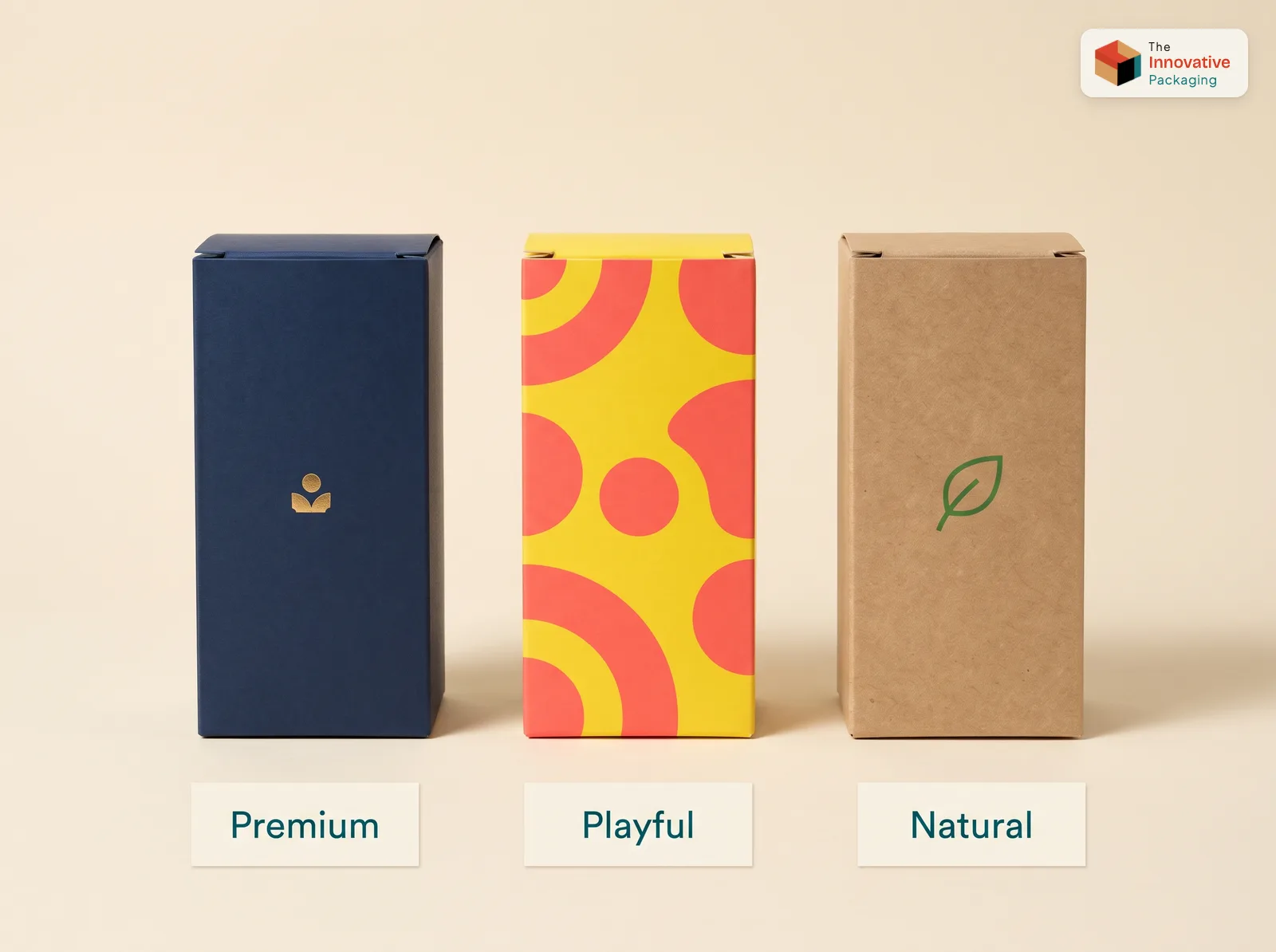
These are tendencies, not rules, and they shift from one category to the next. What matters is that your colors, type and imagery all tell the same story. A calm, minimalist skincare box set in a cartoon font sends mixed signals, and mixed signals leave shoppers on the fence.
Design also sets expectations about what is inside. When the product, its size and its main benefit are clear at a glance, people buy with confidence. When they have to work to figure it out, many simply reach for the box next to it.
3. Better packaging raises perceived value
Customers judge the product by its box long before they try it. A sturdy box with a careful finish suggests a careful product. A thin carton that dents in the hand suggests the opposite, however good the product is.
That is why premium packaging can support a higher price. Heavier board, soft-touch lamination, foil stamping, embossing and a fitted insert all signal quality the moment someone picks up the box. You do not need all of them. One or two well-chosen upgrades usually do more than a box covered in effects, and our guide on how to make packaging look expensive shows which ones give you the most for your money.
Structure plays a part, too. A product with a premium price tag can often justify a rigid box over a folding carton, while most everyday products look just as polished in a well-printed carton.
4. Clear packaging builds trust
Shoppers want to feel sure about what they are buying, especially from a brand they have never tried. Clear, well-organized packaging does much of that reassuring for you.
- Print ingredients, directions and warnings in type large enough to read.
- Keep your look consistent, so the box matches your website, ads and social media.
- Make every claim on the box true and specific. Vague promises wear trust down fast.
- Print cleanly. Blurry text, drifting artwork and a crooked logo all hint at a careless company.
In regulated categories such as supplements, cosmetics and CBD, clear labeling is also a legal requirement. We cover what those labels need in our guides to CBD packaging and custom cosmetic boxes.
5. A good unboxing brings customers back
For online brands, the box is often the first thing a customer actually holds. A plain brown shipper with a loose product inside feels like a transaction. A branded mailer that opens neatly feels like a brand.
Shoppers notice the difference. In a 2016 survey by the fulfillment company Dotcom Distribution, 40 percent of online shoppers said they would be more likely to buy from a retailer that offers premium packaging, and 68 percent said branded packaging makes a brand seem more upscale (SDC Executive).
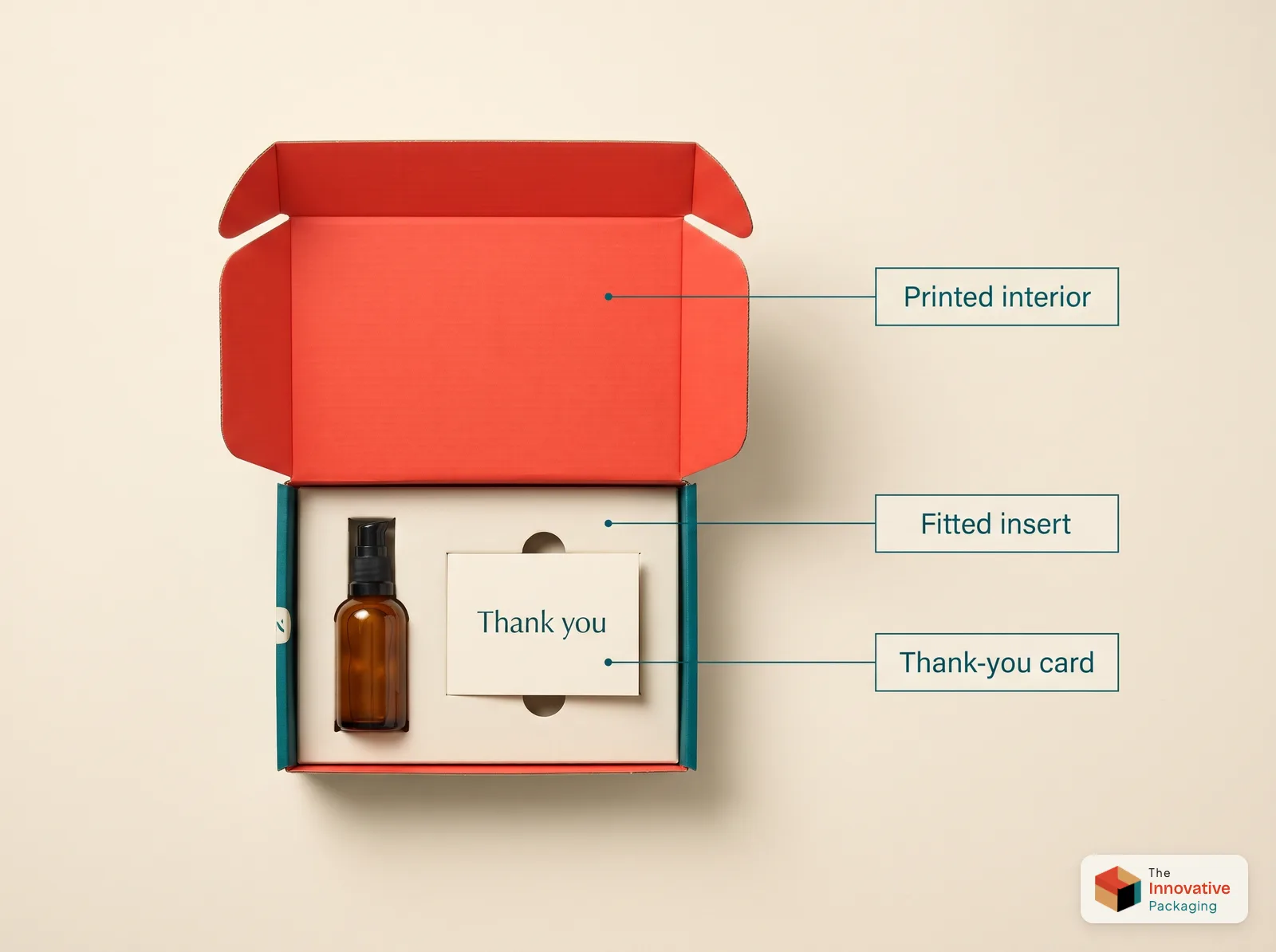
A memorable unboxing does not have to cost a fortune. A printed custom mailer box, an insert that holds the product in place and a short thank-you card go a long way. Protection matters just as much, since a broken product ruins even the best first impression. Our guide on how to prevent shipping damage covers that side of the box.
6. Greener packaging can tip the scales
Many shoppers now think about what happens to a box after they open it, and the sales data suggests they act on it. A 2023 McKinsey and NielsenIQ study of five years of US sales found that products making environmental or social claims grew about 28 percent over the period, compared with about 20 percent for products without them (McKinsey). The authors are careful to say this does not prove cause, but the pattern held in most of the food and personal care categories they studied.
Kraft board, paper inserts in place of plastic and simpler designs that use less material are all good places to start. Just keep your claims honest and specific. The FTC's Green Guides warn brands against broad labels such as "eco-friendly" that they cannot back up. Browse our eco-friendly boxes to see what is possible.
What happens when packaging goes wrong?
The clearest proof that packaging moves sales comes from a famous misstep. In January 2009, Tropicana swapped the familiar orange-with-a-straw carton on its Pure Premium juice for a plain, modern design. Unit sales fell 20 percent in less than two months, and the company brought the old carton back (Advertising Age).
The juice had not changed. Only the box had. Loyal customers could no longer spot their usual brand on the shelf, and many felt the new carton looked generic. The lesson is simple: when you redesign, keep what customers use to recognize you, such as your main color, logo or shape, and update the rest with care.
How to use packaging to increase sales
You do not need a big budget to make your packaging pull its weight. Start here:
- Know where your box is seen. Design for the shelf, the product photo or the doorstep, depending on where most customers meet you.
- Own one color. Use it everywhere, so shoppers learn to spot you.
- Give the front panel one job. Product name, logo and one clear benefit. Everything else can move to the back.
- Spend where customers touch. Heavier board and one quality finish beat extra decoration.
- Design the opening. A printed interior or a fitted insert turns a delivery into a moment.
- Test before you change. Show a new design to real customers before you replace a box that already sells.
Good packaging should pay for itself, so cost matters. Our breakdown of how much custom packaging costs explains what drives the price, and our materials and printing guide shows every board and finish we offer.
Why is packaging important in marketing?
Because it is the one piece of marketing every customer holds in their hands. Packaging often gets filed under production costs, but it does a marketer's job every day. It gets you noticed, sets the price you can charge, earns trust and brings people back. For a small brand up against bigger names, that is a lot riding on one box, and every reason to get it right.
Ready to put your packaging to work? Tell us about your product, your quantity and where it will be sold, and we will recommend the structure, board and finish that fit your goals and budget. Orders start at 100 units, every order includes a free dieline and a digital proof before printing, and shipping is free anywhere in the USA. Request a free quote for custom packaging.
Founder & CEO, The Innovative Packaging · 10 years experience
Ijlal Ahmed founded The Innovative Packaging and runs its production facility in Pakistan. He is the third generation of his family in printing and packaging, a business they have been in for more than 50 years, and works directly with brands on quotes and dielines. He holds a BSc in Economics from the Lahore School of Economics.
Ijlal Ahmed on LinkedInFrequently Asked Questions
Shop the packaging in this guide
Custom Retail Boxes
Looking for high-quality custom retail packaging boxes wholesale that help your products stand out on shelves? At The Innovative Packaging, we produce fully custom retail boxes tailored to your brand identity, product dimensions, and retail environment. Whether you need packaging for cosmetics, food, paper bags, mailer boxes, or display packaging, we have a solution for every retail product in your lineup.
Browse Custom Retail Boxes →Custom Display Boxes
Looking for high-quality custom display boxes wholesale that maximize your product visibility at retail? At The Innovative Packaging, we produce fully custom display packaging tailored to your product dimensions, brand identity, and retail environment. Whether you need counter display boxes, floor display units, or shelf-ready display packaging, we have a solution for every product and retail setting.
Browse Custom Display Boxes →Eco-Friendly Packaging Boxes
Looking for sustainable custom eco-friendly packaging boxes wholesale that reflect your brand's commitment to the environment? At The Innovative Packaging, we produce fully custom green packaging using kraft paper, recycled cardboard, and biodegradable materials tailored to your exact product dimensions and branding. Whether you need eco-friendly boxes for food, dates, baked goods, or general retail products, we have a sustainable packaging solution for every product in your lineup.
Browse Eco-Friendly Packaging Boxes →More from the blog
8 Ways to Make Your Packaging Look Expensive on Any Budget
The most expensive-looking packaging is rarely the most expensive to make. Here is how to make packaging look premium on a small budget: a calmer design, heavier board, soft-touch lamination, one well-chosen finish and an unboxing worth remembering.
Read more →Packaging Trends 2026: What Small Brands Should Act On
Seven states now have packaging recycling laws, recyclable labels face stricter rules and oversized boxes cost more to ship. Here are the packaging trends for 2026 that actually affect small brands, and what to do about each one.
Read more →How Much Do Custom Boxes Cost in 2026? A Guide for Small Brands
Custom box prices depend on five things: style, size, material, print and finish, and quantity. Here is how each one moves the price, and how to get an exact quote.
Read more →