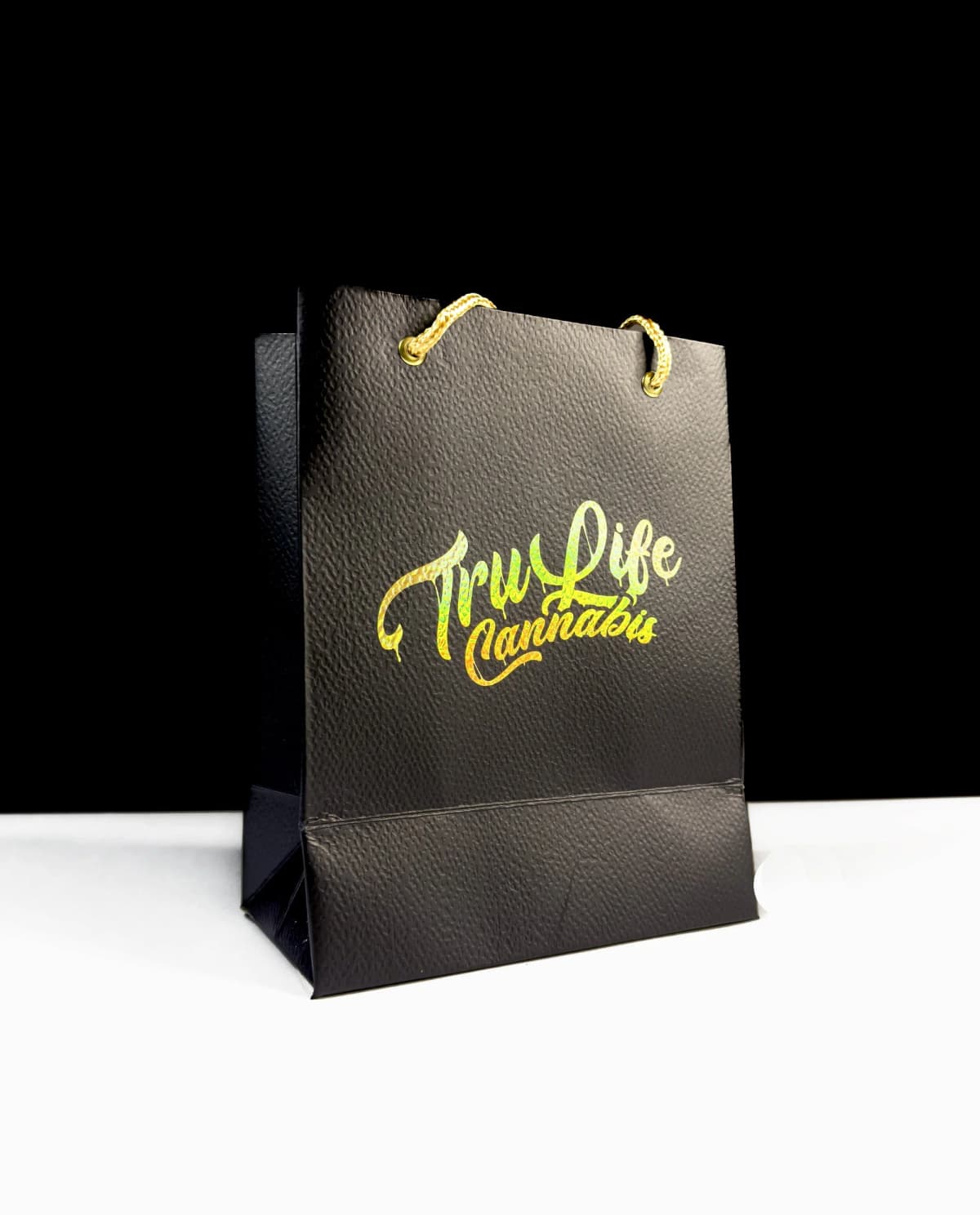
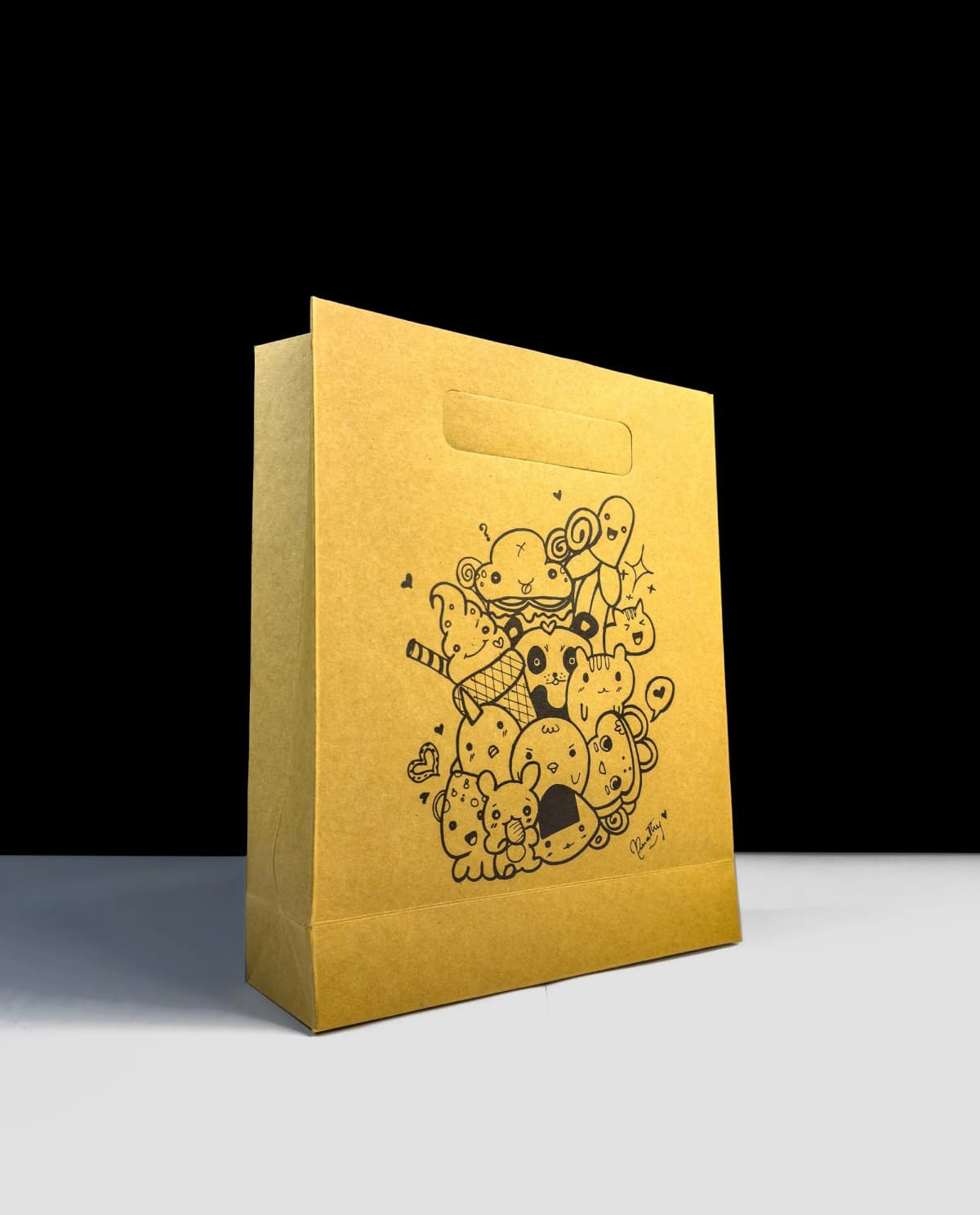
Custom Kraft Paper Bags
A paper bag is a structural product that happens to be made of paper. It carries a load by its handle, holds its shape when set down, and has to stay square while someone walks with it. The parts that decide whether it does all that - the base, the gusset, the top edge - are the parts customers never look at.
FSC Certified
Sustainably sourced paper and board
Food-Grade Safe
FDA-compliant materials for direct food contact
Recyclable options available
Uncoated kraft and paper builds qualify; laminated, foil and rigid builds do not
Sedex Member
Audited for ethical, responsible sourcing
Specifications
- Material
- Kraft Paper
- Printing
- Full-Color CMYK / Offset
- Finish
- Matte / Gloss Lamination
- MOQ
- 100 Units
Printing & Finishing
- Full-Color CMYK
- Spot Colors (Pantone)
- Interior Printing
How a Bag Is Built
Four elements make up any paper bag, and each is a specification you can change.
The base is what most failures come back to. A simple glued base folds flat and is fine for light contents; a reinforced base with an inserted card holds a flat bottom under weight and stops the bag pouching into a sag. Anything with a rigid or heavy item in it should have the reinforcement.
The gusset is the folded side panel that lets the bag expand. A deep gusset gives capacity and lets the bag stand open on a counter, which matters for food service where a bag is filled one-handed. A shallow gusset keeps a slim, boutique profile.
The top edge is where the handle load concentrates. A turnover top - the paper folded back on itself and glued - roughly doubles the material at the tear point and is standard on anything but the lightest bags.
The handle attaches either through the top edge or to the inside face, and how it attaches matters as much as what it is made of.
Bag Formats We Produce
- Boutique bag: around 200 x 100 x 250mm, shallow gusset, rope or ribbon handle.
- Standard retail bag: around 260 x 120 x 320mm.
- Large retail or apparel bag: around 350 x 150 x 400mm with a reinforced base.
- Food takeaway bag: around 220 x 140 x 250mm, deep gusset, twisted paper handles.
- Wine or bottle bag: around 120 x 90 x 350mm, often with a divider for two bottles.
- Handle-free small bag: around 150 x 80 x 200mm for counter and gift use.
All built to your specification rather than picked from stock sizes.
Food Service Bags
Bags used for food have requirements a retail bag does not. If the bag touches food directly - bakery items, pastries, sandwiches - it needs food-grade paper, which is a stock specification set at the quote stage rather than a treatment added later. Greaseproof grades are available where the contents are oily.
For hot food in containers, the constraints are different again: the bag needs a flat reinforced base so containers sit level and do not tip, a gusset deep enough to take a stacked order, and enough height that the top can be folded or stapled shut. Twisted paper handles are the usual choice here because they are fully recyclable along with the bag.
Print Area and Where the Design Goes
A bag's usable print area is smaller than its dimensions suggest. The turnover at the top takes a strip out of the design, the gussets fold away when the bag is flat, and the base panel is never seen. Design for the front and back faces as the primary surfaces, and treat the gussets as secondary - many brands leave them plain deliberately, so the design stays clean when the bag is folded and stacked.
Kraft's brown ground affects colour the same way it does on a box: printed colours sit into the stock, white does not appear without an underlayer, and photographic imagery loses contrast. Bags are one of the formats where that is least of a problem, because most bag artwork is a logo and one or two colours. Where full-colour photographic artwork is essential, a white kraft or coated stock is the better base - see our materials and printing page.
Boutique Retail Versus Volume Use
The same bag serves two quite different jobs, and specifying for the wrong one is the usual source of disappointment.
A boutique bag is part of the purchase. It is carried out of a shop, seen on the street, and often kept and reused. That justifies heavier paper, a rope or ribbon handle, a turnover top and a considered finish - it is closer to a gift box than to a container, and customers judge it accordingly.
A volume bag - grocery, pharmacy, takeaway - is used once and discarded within the hour. Here the priorities invert: cost per unit, how fast it opens one-handed at a counter, whether it stands up while being filled, and whether it recycles cleanly. A luxurious handle on a bag that will be in a bin by lunchtime is money spent where nobody notices it.
Most brands that order both are better served by two specifications than by one compromise bag that is expensive for volume use and underwhelming for retail.
The Sustainability Position
Paper bags are one of the easiest packaging items to make genuinely recyclable, and one of the easiest to accidentally compromise. Uncoated kraft with soy-based inks and twisted paper handles is recyclable as a single item with no separation. Add a laminated finish, a ribbon handle, or a plastic-reinforced base and the bag becomes a mixed item that most customers will not separate.
If the recyclability claim is part of your brand, spec the handle to match the paper. It is the component that most often quietly undoes the rest.
Ordering Paper Bags
Tell us the size, and then tell us the heaviest thing the bag will ever carry. We spec the paper and the base off that number, not the typical order. Mention the handle you want and whether food touches the paper. Related: custom paper bags, cardboard boxes, and the eco-friendly packaging range.
Custom Kraft Paper Bags — FAQs
Got questions? We have answers. If you need anything else, get in touch.
It depends on the paper weight and the handle. Lighter kraft suits boutique and cosmetics; heavier stock with a reinforced top edge is needed for bottles or multiple items. Tell us the heaviest order the bag has to carry and we will spec the paper to it.
Twisted paper handles are fully recyclable and suit food and eco-focused brands. Flat cotton or ribbon handles feel softer in the hand and are the usual choice for retail and gifting. Die-cut handles remove the attachment entirely and are the lowest-cost option.
Yes. Both faces and the gussets can be printed, and the gussets are often left plain to keep the design clean when the bag is folded. Full-colour CMYK and Pantone matching are both available.
Related Products
Ready to start your project?
Tell us what you need. We get back to you within a business day.